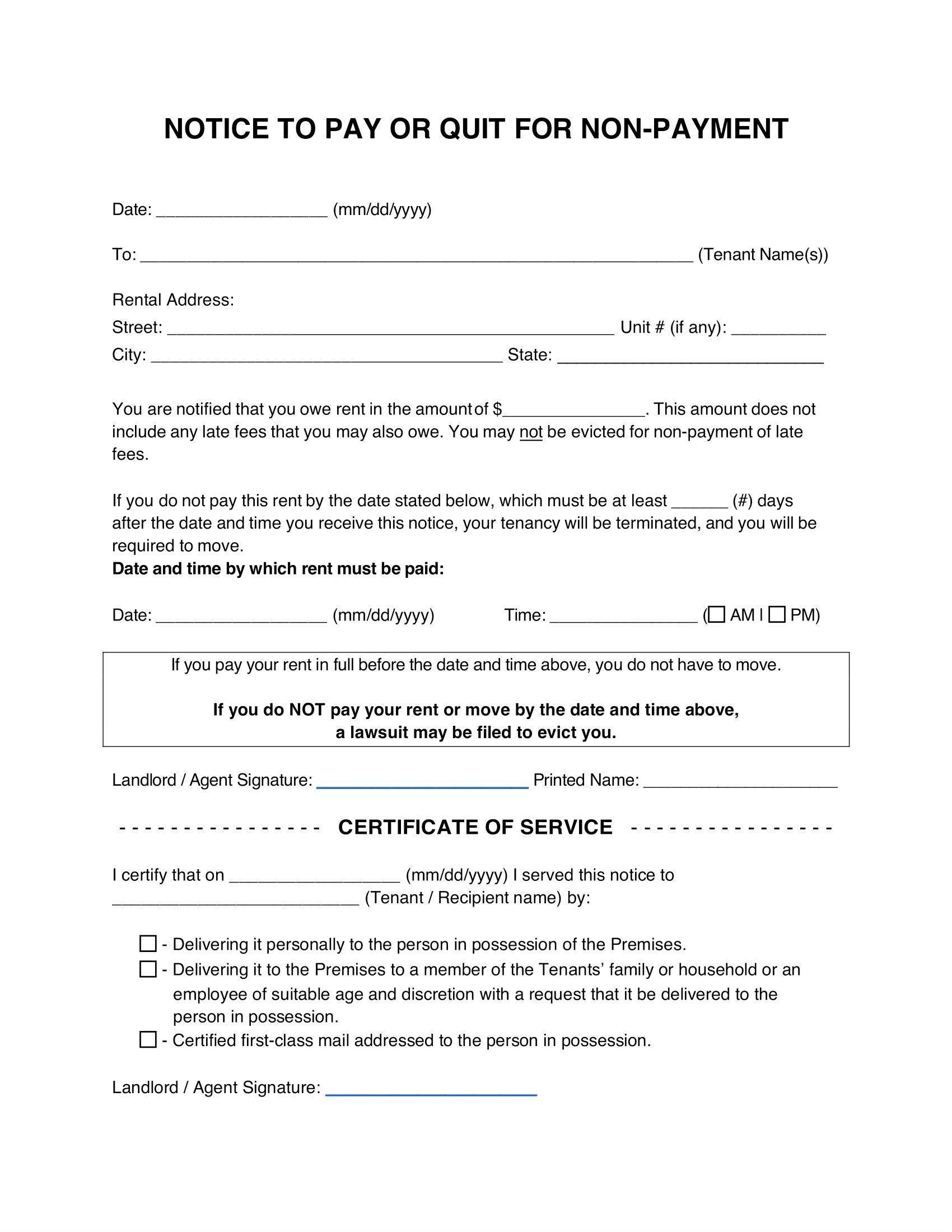
Free Fillable Eviction Notice Form
Depending on where you live, different laws will apply regarding eviction notices. Generally speaking, your landlord must provide written notice and follow the local rules for evicting someone from a residence before they can legally do it. They may need to provide a certain amount of advance notice and may need to go through the local court system to get an official eviction order.
Eviction notices can be intimidating and stressful, but they don’t have to be your last resort. Before you receive an eviction notice, it’s important to know what rights and responsibilities you have as a tenant. Try to contact your landlord or property manager and work out a solution as soon as possible. If you can’t come to an agreement, seek legal advice from a housing lawyer or tenant advocacy group for help understanding your options.
No one deserves to be evicted unfairly, and no one should ignore an eviction notice. Understanding the law and your rights as a tenant is the first step toward resolving any eviction issues. Take action to protect yourself, and don’t be afraid to seek help if you need it.
How to Fill Out an Eviction Notice?
Step 1 – Who are the tenants to be evicted?
The first step in filling out an eviction notice is identifying the tenants who will be evicted. This includes listing their name, address, and any other relevant information.
Step 2 – What are the reasons for eviction?
The next step is to provide the reasons why the tenant(s) are being evicted. Generally, this will include the terms of the lease or rental agreement that were violated.
Step 3 – How much time do they have to move out?
The eviction notice should also provide a timeline for when the tenant(s) must vacate the property. Depending on local laws and the severity of the violation, this could range from a few days to a few months.
Step 4 – What will happen if they fail to move out?
Finally, the eviction notice should state what will happen if the tenant(s) fail to move out by the given date. This could include getting locked out of the property or having their possessions removed from the premises.
It’s important to note that an eviction notice is not a court order, so the tenant still has rights even after receiving one. If you’re in this situation, it’s best to seek legal advice before taking any further action.
The bottom line is: eviction is a serious matter and should not be taken lightly. If you get an eviction notice, it’s important to know your rights and take action as soon as possible. Don’t be afraid to seek help and get everything in writing if you’re able to work out an agreement with your landlord. With the right knowledge and resources, you can do your best to protect yourself from unwanted eviction.
What is Considered an Eviction?
An eviction is considered a legal process by which a landlord can remove a tenant from their rental unit. It’s initiated when the landlord serves the tenant with an eviction notice, sometimes referred to as a “notice to quit.” This document must state why the tenant is being evicted and how long they have to move out. Depending on the laws in your area, the landlord may also need to file a court action and get a court order before they can legally evict you.
Once an eviction is ordered by the court, the tenant must vacate their residence immediately or face legal consequences. Depending on local laws, this could mean that law enforcement officers will come to the property and physically remove the tenant.
In some cases, tenants may be able to work out an agreement with their landlord before eviction is ordered. This could involve paying overdue rent or making repairs to the property, but it’s important to get everything in writing so that both parties are clear about what was agreed upon. If you’re in this situation, it’s always best to seek legal advice before signing any agreements or documents.
For What Reasons Might One Get Evicted?
The most common reasons for getting evicted are failing to pay rent on time, violating the terms of the lease or rental agreement, or engaging in illegal activities. Depending on local laws, a tenant may also be evicted if they damage the property or disturb other tenants by making too much noise.
In some cases, a landlord may also initiate an eviction simply because they want the tenant to move out. This is called a “no-cause” eviction and it’s illegal in many jurisdictions. If you think you’re being evicted for no reason, it’s important to seek legal advice from a housing lawyer or tenant advocacy group right away.
What Rights Do Tenants Have?
Tenants have a variety of rights depending on the laws in their area. Generally speaking, they have the right to receive proper notice before eviction and to be treated fairly throughout the process. Most importantly, tenants also have the right to challenge an eviction in court if they feel it’s unjust.
Tenants also have the right to be free from retaliation. This means that a landlord cannot retaliate against a tenant for exercising their rights or for filing a complaint about the rental property. If you think your landlord is retaliating against you, it’s important to speak with an attorney or housing advocate right away.